
By Shereen Shabnam
Crisis situations can strike any organization unexpectedly, posing significant threats to their reputation, operations, and stakeholders. In times of crisis, effective public relations (PR) plays a pivotal role in managing the situation, mitigating damage, and rebuilding trust. My first crisis management plan was for Lufthansa more than 18years ago and it was one of the most exciting content documents I ever created.
A few years later, we did similar process plans for an architecture firm, when I looked after Air Arabia PR and for a retail giant – in each project, we delved into the essential functions of PR in crisis management and highlighted key strategies for successfully navigating through challenging times. Below is what we find key elements for businesses to consider.
One of the primary responsibilities of PR professionals is to proactively develop a crisis management plan before any crisis occurs. This plan should include clear protocols, designated spokespeople, and strategies for communication channels. By anticipating potential crises and preparing in advance, organizations can respond more swiftly and effectively when a crisis hits.
During a crisis, maintaining open and transparent communication is paramount. PR professionals serve as the bridge between the organization and its stakeholders, ensuring that accurate information is disseminated in a timely manner. Promptly address the crisis, share updates, and provide guidance to stakeholders through various communication channels, such as press releases, social media, and direct outreach. Transparent communication helps maintain credibility and fosters trust in the organization’s ability to handle the situation.
The associated PR professionals are responsible for managing media relations during a crisis. They act as the organization’s spokesperson, providing accurate information and responding to media inquiries promptly.
Establishing strong relationships with journalists beforehand can facilitate smoother communication during a crisis. PR professionals should also proactively reach out to the media, sharing key messages, updates, and addressing any misconceptions or inaccuracies in media coverage.
Effective crisis management requires thoughtful engagement with stakeholders, including employees, customers, partners, and the community. PR professionals must develop targeted messaging tailored to each stakeholder group. Engage with stakeholders through various channels, such as town hall meetings, internal communications, social media, and dedicated helplines. By addressing concerns, providing updates, and demonstrating empathy, PR professionals can help rebuild trust and maintain support during and after the crisis.
PR professionals also play a critical role in managing the organization’s reputation during a crisis. They monitor media coverage, social media conversations, and online platforms to gauge public sentiment and identify potential reputational risks.
It is evident that by actively addressing negative narratives and correcting misinformation, PR professionals can limit reputational damage. They should also coordinate with legal teams to ensure that the organization’s public statements align with any legal obligations or restrictions.
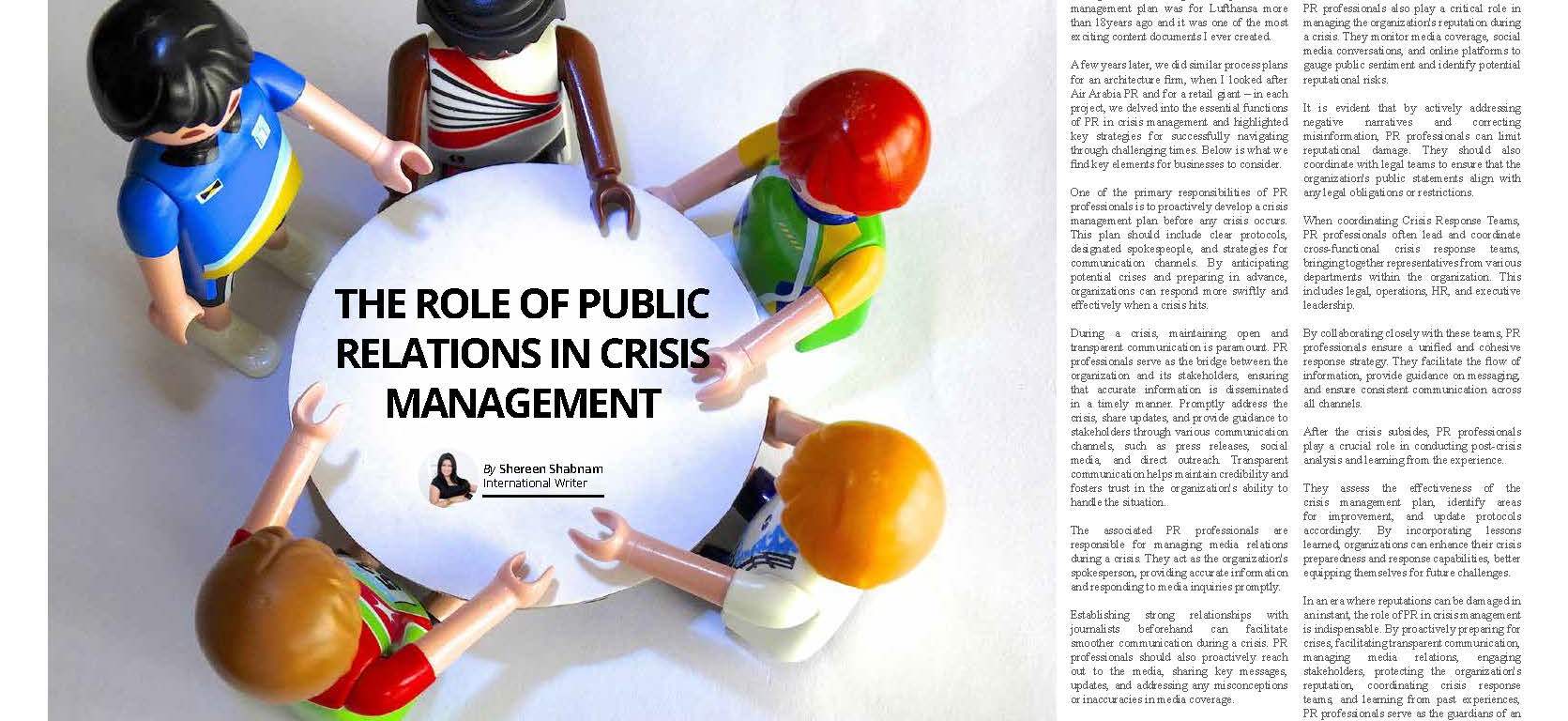
When coordinating Crisis Response Teams, PR professionals often lead and coordinate cross-functional crisis response teams, bringing together representatives from various departments within the organization. This includes legal, operations, HR, and executive leadership.
By collaborating closely with these teams, PR professionals ensure a unified and cohesive response strategy. They facilitate the flow of information, provide guidance on messaging, and ensure consistent communication across all channels.
After the crisis subsides, PR professionals play a crucial role in conducting post-crisis analysis and learning from the experience.
They assess the effectiveness of the crisis management plan, identify areas for improvement, and update protocols accordingly. By incorporating lessons learned, organizations can enhance their crisis preparedness and response capabilities, better equipping themselves for future challenges.
In an era where reputations can be damaged in an instant, the role of PR in crisis management is indispensable. By proactively preparing for crises, facilitating transparent communication, managing media relations, engaging stakeholders, protecting the organization’s reputation, coordinating crisis response teams, and learning from past experiences, PR professionals serve as the guardians of an organization’s image during turbulent times.
Their strategic efforts are vital in effectively managing crises, preserving stakeholder trust, and steering organizations towards successful recovery.


