
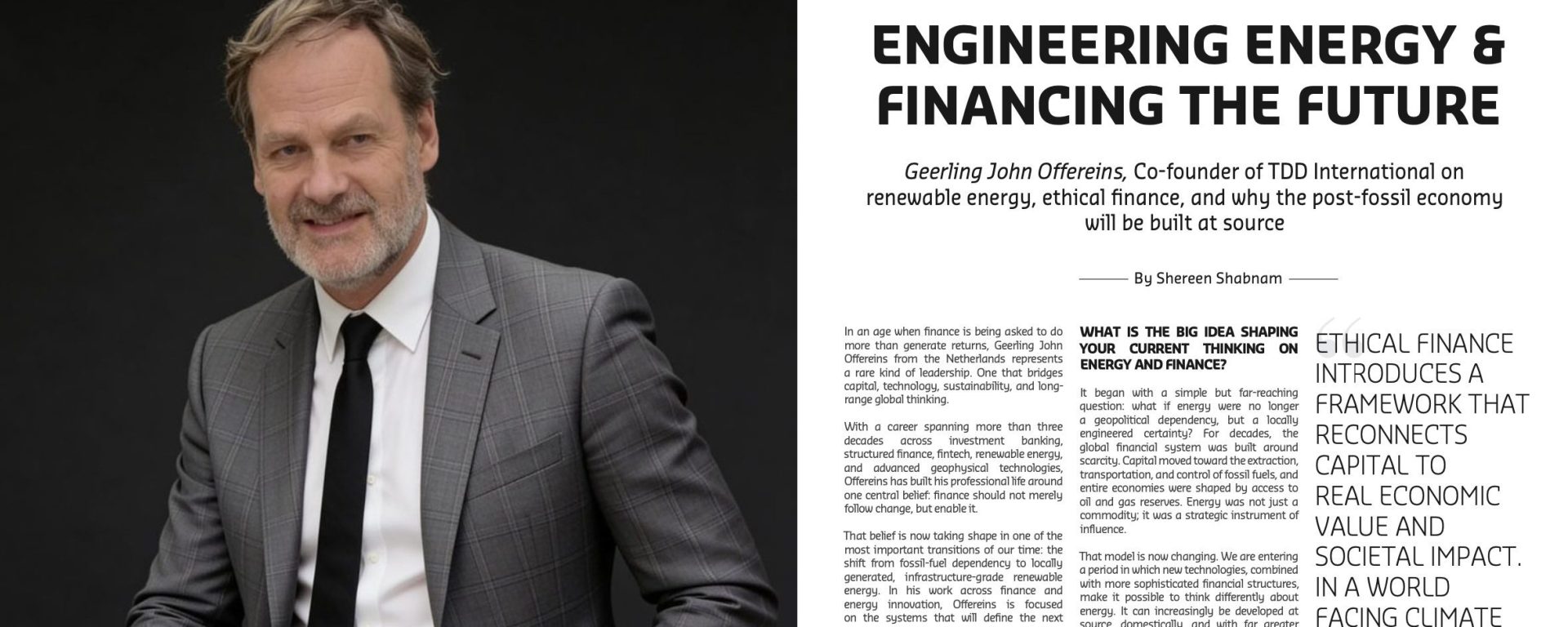
Geerling John Offereins, Co-founder of TDD International on renewable energy, ethical finance, and why the post-fossil economy will be built at source
Shereen Shabnam
In an age when finance is being asked to do more than generate returns, Geerling John Offereins from the Netherlands represents a rare kind of leadership. One that bridges capital, technology, sustainability, and long-range global thinking. With a career spanning more than three decades across investment banking, structured finance, fintech, renewable energy, and advanced geophysical technologies, Offereins has built his professional life around one central belief: finance should not merely follow change, but enable it.
That belief is now taking shape in one of the most important transitions of our time: the shift from fossil-fuel dependency to locally generated, infrastructure-grade renewable energy. In his work across finance and energy innovation, Offereins is focused on the systems that will define the next economic era, where nations can reduce strategic dependence, investors can access resilient long-term assets, and technology can transform energy from an imported commodity into a domestically engineered certainty.
As CFO and strategic leader across ventures spanning deep detection technology, renewable energy, and ethical finance, he brings both technical understanding and financial discipline to a conversation that is becoming increasingly urgent.
In this cover story conversation, Offereins discusses why ultra-deep geothermal energy deserves more attention, how ethical finance can reshape investment logic, and why the future economy will belong to those who know how to align capital with sustainability, sovereignty, and innovation.
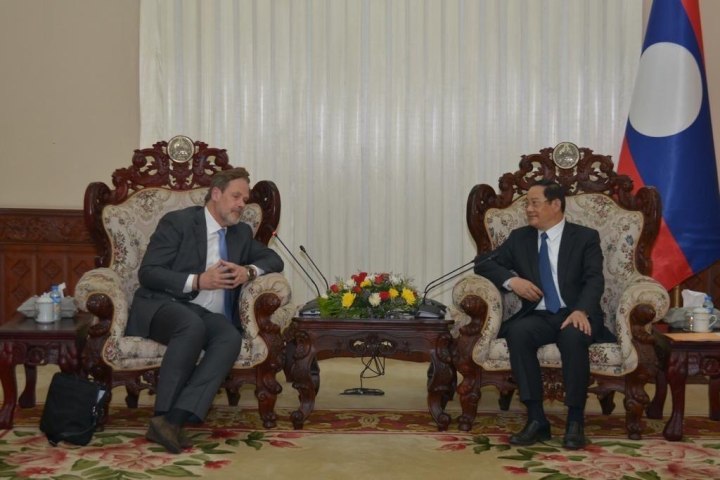
Offereins discusses geothermal energy with the Prime Minister of Laos
What is the big idea shaping your current thinking on energy and finance?
It began with a simple but far-reaching question: what if energy were no longer a geopolitical dependency, but a locally engineered certainty? For decades, the global financial system was built around scarcity. Capital moved toward the extraction, transportation, and control of fossil fuels, and entire economies were shaped by access to oil and gas reserves. Energy was not just a commodity; it was a strategic instrument of influence.
That model is now changing. We are entering a period in which new technologies, combined with more sophisticated financial structures, make it possible to think differently about energy. It can increasingly be developed at source, domestically, and with far greater predictability. This matters not only for governments and infrastructure planners, but also for investors. What we are seeing is a shift toward long-duration, infrastructure-grade assets that offer strategic value as well as stable yields. In that sense, renewable energy is no longer simply part of the sustainability conversation. It is becoming central to economic resilience, capital allocation, and national autonomy.
How has your own career evolved to place you at this intersection of finance and innovation?
My career has evolved alongside this transformation. I began in more traditional fields of corporate finance, structured financing, credit enhancement, valuation, and cross-border transactions. Those experiences were foundational because they taught me how capital behaves, how risk is priced and should be interpreted, and how complex financial systems are structured. But over time it became clear to me that the future of finance would not be defined by financial engineering alone. It would be defined by its ability to enable technological breakthroughs at scale, underpinned by tangible, quantifiable energy units.
That realization took me into areas where finance intersects with innovative technology. In my case, that has included fintech, advanced geophysical technologies, and renewable energy systems. What interests me most is not technology in isolation, but how capital can be structured around it to move an idea from concept to execution. That requires both discipline and imagination. You need to understand the technology deeply enough to assess its long-term potential, but also design financial frameworks that make it investable. That, for me, is where the real frontier lies.
You often speak about ethical finance. Why is that so important in this new era?
Because as capital flows into new frontiers, the question of how we invest becomes just as important as where we invest. Ethical finance introduces a framework that reconnects capital to real economic value and societal impact. In a world facing climate pressures, resource constraints, and growing inequality, finance cannot afford to be detached from consequence.
I have always found value in structures that emphasize transparency, asset-backing, and risk-sharing. These are principles that are also central to Shariah-compliant finance, which I believe offers a robust foundation for long-term and sustainable investment. Ethical finance is not about sacrificing returns. It is about building returns on stronger ground. In the energy sector, this means looking at the full lifecycle of infrastructure, assessing carbon intensity, and ensuring that financial performance aligns with environmental benefit. Increasingly, investors want more than yield; they want credibility, resilience, and measurable positive impact. Ethical finance provides a disciplined way to think about that. It acknowledges that if climate-related risks ultimately disrupt returns, the investment model has not delivered its true objective.
Why do you see ultra-deep geothermal energy as such a compelling opportunity?
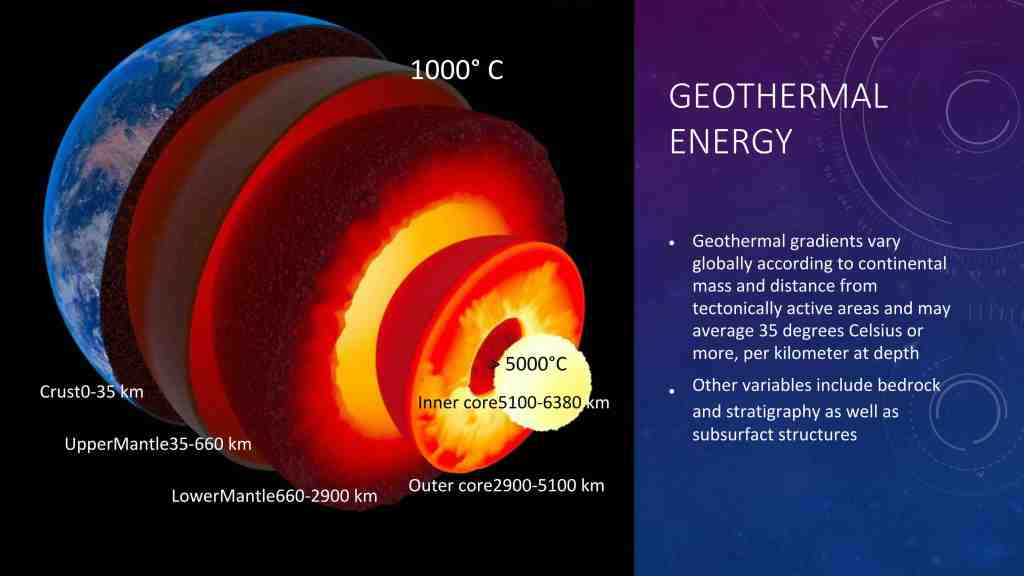
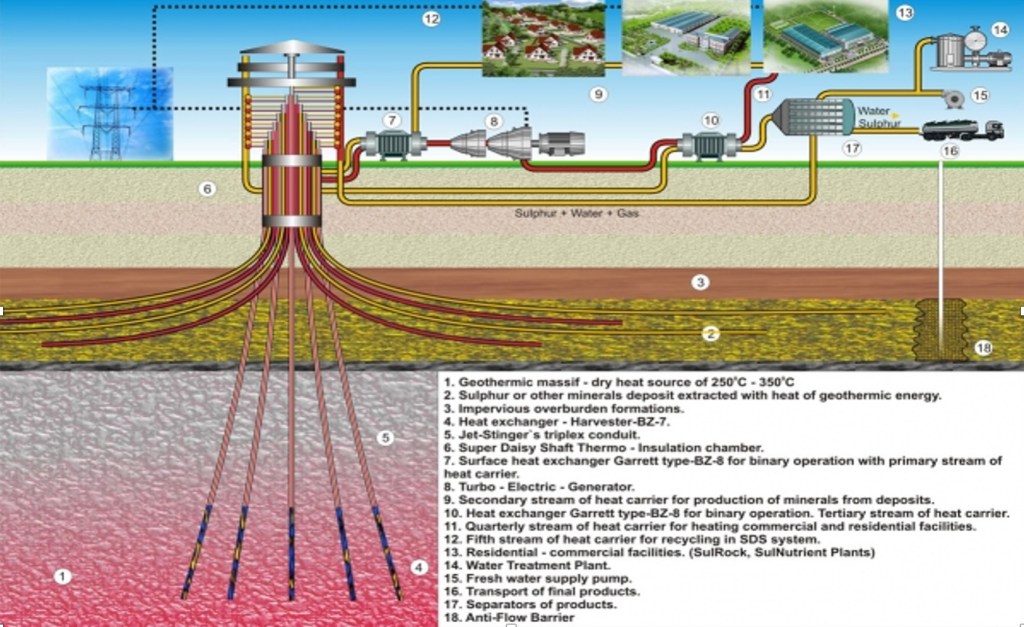
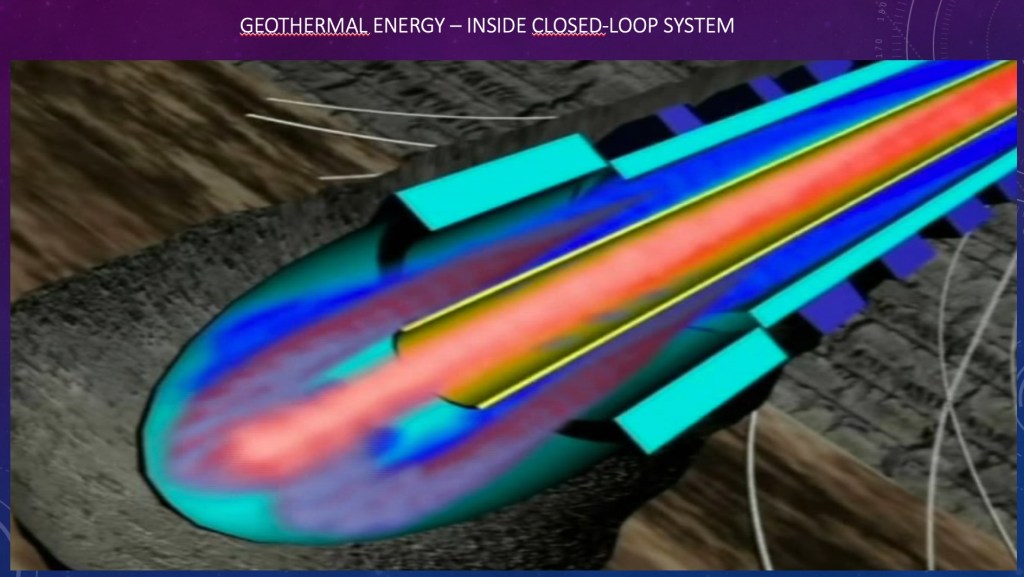
Because it solves one of the major limitations of the renewable energy conversation, geothermal energy is also the ideal energy source / feed stock for water desalination installations—an application that is crucial for our future fresh water supply. Solar and wind are essential and have already transformed the market, but even in combination with large battery systems they remain intermittent and fragmented. Ultra-deep geothermal energy, by contrast, belongs to a different category: it provides continuous, baseload, CO₂-neutral energy generation. This makes it particularly suitable for energy-intensive applications such as desalination, while also making it incredibly valuable from both an energy security and infrastructure investment perspective.
Historically, the challenge with geothermal was uncertainty. The cost and risk of drilling without precise knowledge of subsurface thermal conditions made many projects difficult to finance. But that is changing rapidly. Advances in geophysical mapping and subsurface analysis now allow us to identify high-enthalpy zones with a much greater degree of accuracy. That means we can better determine where to drill, how to optimise access, and how to reduce dry-well risk. The implication is significant: geothermal is moving from a speculative field into a more predictable, bankable asset class. For investors, that changes the equation entirely.
How does technology help de-risk renewable energy investment?
Technology is the bridge between vision and bankability. In energy, especially in areas like geothermal, one of the biggest obstacles has always been risk. If you cannot quantify geological conditions with confidence, then the investment remains uncertain. What advanced mapping technologies now allow us to do is reduce that uncertainty dramatically. It now allow us to significantly reduce uncertainty by leveraging high-precision magneto-telluric analysis and mapping technology in a fully omni-dimensional X, Y, and Z spectrum, hence enabling the accurate visualisation of subsurface anomalies at depths reaching even 8 to 10 kilometres.
By analysing subsurface structures, heat flow, stratification, and accessibility, we can make much more informed decisions before drilling begins. That improves the probability of yield realization, lowers upfront risk, and strengthens long-term cash flow potential. For investors, these are not minor improvements; they are the factors that determine whether a project can move from concept to infrastructure-grade financing. Technology does not eliminate risk, of course, but it transforms unknowns into measurable variables. That is what makes capital more comfortable, and that is what ultimately allows scale and makes it viable and feasible.
What are the wider geopolitical and economic implications of energy being generated locally?
They are profound. When countries can generate more of their own energy from local renewable resources, the structure of dependency changes. Reliance on imported fossil fuels can be reduced. Exposure to pricing volatility can be lowered. Trade balances can improve. Macro-economic resilience becomes stronger because energy security is no longer tied to external supply chains in the same way. Even in regions where geothermal resources are less accessible due to geological complexity, the transition remains achievable. This can be by importing hydrogen generated from abundant and stable geothermal sources, preserving a carbon-neutral footprint with lower volatility, or by intensifying the development of solar and wind energy solutions.
This also has geopolitical implications. For decades, energy dependency has shaped alliances, competition, and in some cases conflict. A more distributed and locally engineered energy model creates a different kind of global balance. It does not eliminate geopolitics, but it changes the terms. Countries with the ability to leverage domestic geothermal or other renewable resources can strengthen sovereignty in a very practical way. From a financial standpoint, this opens opportunities in long-term energy contracts, sovereign-backed renewable funds, and infrastructure platforms built on durable demand. In other words, the energy transition is not only an environmental necessity; it is a macroeconomic catalyst.
How important is local execution in what is often described as a global transition?
It is absolutely critical. The opportunity may be global, but execution is always local. Each region has its own geological characteristics, regulatory conditions, financial capacities, and developmental priorities. You cannot simply apply one investment model everywhere and expect the same outcome. What is needed is a tailored approach, one that aligns the local resource base with the right financing structure and implementation strategy.
At the same time, we cannot ignore the global context. Climate goals are shared, and the urgency of CO₂ reduction applies everywhere. That is why investment decisions need to incorporate a broader understanding of carbon footprint, energy efficiency, and long-term sustainability. I also see value in combining energy development with forestry and carbon capture initiatives, because together they create a more integrated climate strategy. In the years ahead, the strongest investment models will be the ones capable of connecting local execution with global environmental objectives.
What kind of financial structures are needed to support the future energy economy?
Traditional financing models are often not designed for the scale, duration, and complexity of renewable infrastructure. If we want to accelerate the post-fossil economy, we need a new generation of financial architecture. That means structures that align long-term capital with long-term assets, support public-private collaboration, and integrate technological risk mitigation into the investment framework.
I believe we will see increasing relevance for blended finance models, sovereign co-investment platforms, and ESG-linked vehicles. These structures can help bridge the gap between innovation and scale by bringing together governments, institutional capital, and technology developers in a more coherent way. Finance, in this context, is no longer just a passive allocator of resources. It becomes an active enabler of systemic transformation. That is a major shift. It means the design of financial systems will matter just as much as the technologies they support.
What does the post-fossil economy look like to you?
To me, the post-fossil economy is not a distant theory. It is an investable reality that is already emerging. It is an economy in which energy is locally generated, globally scalable, environmentally sustainable, and financially viable. It is powered by a new convergence: advanced mapping technologies, intelligent capital structuring, and renewable systems capable of delivering stable output over long periods.
For investors, policymakers, and industry leaders, the message is becoming clearer. The future of energy will not be imported in the same way it has been in the fossil era. It will increasingly be engineered, financed, and realised at source. That changes the role of finance, the nature of infrastructure, and the economic logic of sovereignty. It also changes the way we think about leadership. The next generation of financial leaders will not simply manage capital. They will help design the systems through which societies achieve resilience, sustainability, and growth.
It is clear that Offereins is part of a new generation of financial leaders. They are not simply adapting to change but actively designing the systems that will define the future of global energy and economic resilience. For him, the real opportunity lies not only in financing the future, but in building the infrastructure that allow it to endure.
Ultimately, fossil fuels are finite, becoming increasingly scarce and destined to decline, while renewable energy offers an abundant and sustainable pathway to long-term energy security.
Geerling John Offereins can be contacted on offereins@tdd-international.com

 Business Insights